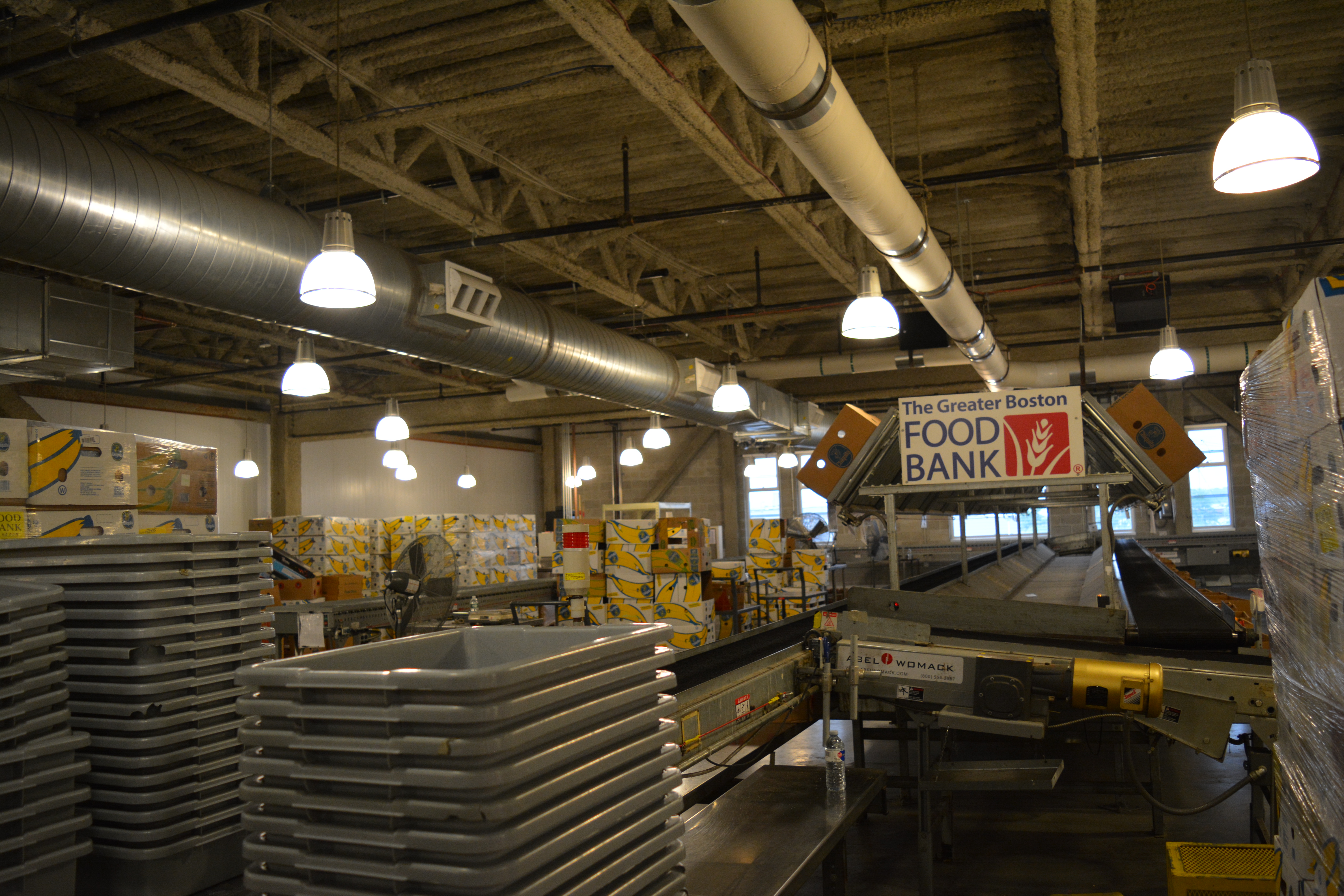
Many people cannot imagine where they will be in 10 years, but the Greater Boston Food Bank sees itself making Eastern Massachusetts hunger free by then.
The Food Bank recently launched a new campaign known as HungerFree28, with a goal to make Eastern Massachusetts hunger free by 2028. They hope to provide three nutritious meals a day to those suffering from food insecurity.
According to the Massachusetts Public Health Association, there are many neighborhoods in Boston that do not have immediate access to healthier and more nutritious food. For many it is also a matter of the higher prices of fresh produce. Many employed, food insecure households skip meals in order to cover other expenses, such as medical costs or housing bills.
“We want to increase the matrixed way of delivering food and access to food,” said Catherine Drennan, director of communications and public affairs, who explained how the Food Bank distributes their food through their large network of food pantries, health centers, and other programs.
For Drennan, this means increasing awareness of how people with limited access to food can get fresh foods and produce through their local food pantries or meal programs.
Drennan emphasized how hunger transcends the borders of poverty. Many working families and individuals simply do not have an income that can provide three meals a day. Immigrants, seniors, children, veterans, and the chronically ill are just some populations that do not have consistent access to food.
“There are many different faces of hunger,” Drennan said.
In Eastern Massachusetts, one in 11 people and one in nine children are food insecure, while food bank serves one in 12 people.
According to the Food Research and Action Center, food insecurity is an increasing problem. From 15.1 percent in 2016, the national rate of food insecurity rose to 15.7 percent in 2017. It is expected to continue increasing.
With current trends, the Food Bank estimates that to accomplish the goal of the HungerFree28 campaign, it will cost $50 million, but with an unreliable future, that could change.
“We had to put a stake in the ground, make a statement, and have a goal to work towards, but anything could happen,” Drennan said.
The organization is committing $11.4 million, raised through private funds, toward the needed $50 million cost. It is also looking at state and federal funding to help cover the amount of money needed for the campaign.
Even with an uncertain future funding, the Food Bank has made significant progress. Currently, of the people it serves, around 80 percent have access to three meals a day.
“We see a lot of people who benefit from our services each and every day,” said Dan McCarthy, the Food Bank’s government relations coordinator.
Leave a Comment